
The Bourgogne-Franche-Comté region is known for its stunning and countless châteaux. There are over 500 of them! With a rich historical heritage linked to the Dukes of Burgundy, some of them are open to visitors. The best known are Clos Vougeot and the fortress of Châteauneuf. Today I’m introducing you to the Château de Bussy-Rabutin, which is less well- known but just as fascinating. If you’re interested in history and would like to discover the châteaux of Burgundy, this article is for you!
Where is the Château de Bussy-Rabutin?
It is in the Auxois region, in the commune of Bussy-le-Grand that you can discover this château with its surprising history. To get to the château from Dijon, there are several options available:
- by car, it takes around 50 minutes from Dijon. A visitor car park is available on site
- by train: the nearest stop is at Venarey-les-Laumes (which I’d recommend visiting, by the way – see my dedicated article)
- by bike: if you decide to explore Burgundy by bike, bear in mind that the village of Bussy-le-Grand is situated very close to cycle routes, such as the Burgundy Canal route. You can park your bike on site.
- In short, there are many ways to get to this little gem, just choose the one that’s convenient for you!
History of the Château de Bussy-Rabutin
The Château de Bussy-Rabutin has been inhabited by several successive families. It was François de Rabutin, Roger de Bussy-Rabutin’s grandfather, who bought the property in 1602. It is Roger de Bussy-Rabutin who would leave his mark on this place.
Roger de Bussy-Rabutin, the son of a lieutenant, was trained from an early age in the art of war and initially made a name for himself as a soldier. A cousin of the Marquise de Sévigné (who would become his confidante and with whom he hada long correspondence), his talents as a writer earned him admission to the Académie Française in 1665. However, it was one of his works, L’Histoire amoureuse des Gaules, which turned his life on its head.
Indeed, this 17th-century nobleman moved in the circles of the Court and the fashionable salons. Endowed with a sharp wit, he depicted in L’Histoire amoureuse des Gaules the frivolous underbelly of this noble class. His work was published without his consent and King Louis XIV first sentenced him to a year’s imprisonment in the Bastille, then to permanent exile in this part of Burgundy. During these years of exile, Roger de Bussy-Rabutin devoted himself to maintaining the château he had inherited. Inside, there are numerous nods to the Court of Versailles. He thus succeeded in recreating the entire atmosphere of the Court within his own château, not without a touch of humour and sarcasm that characterises him. This château is therefore decorated as an autobiography.
A tour of the château’s gardens
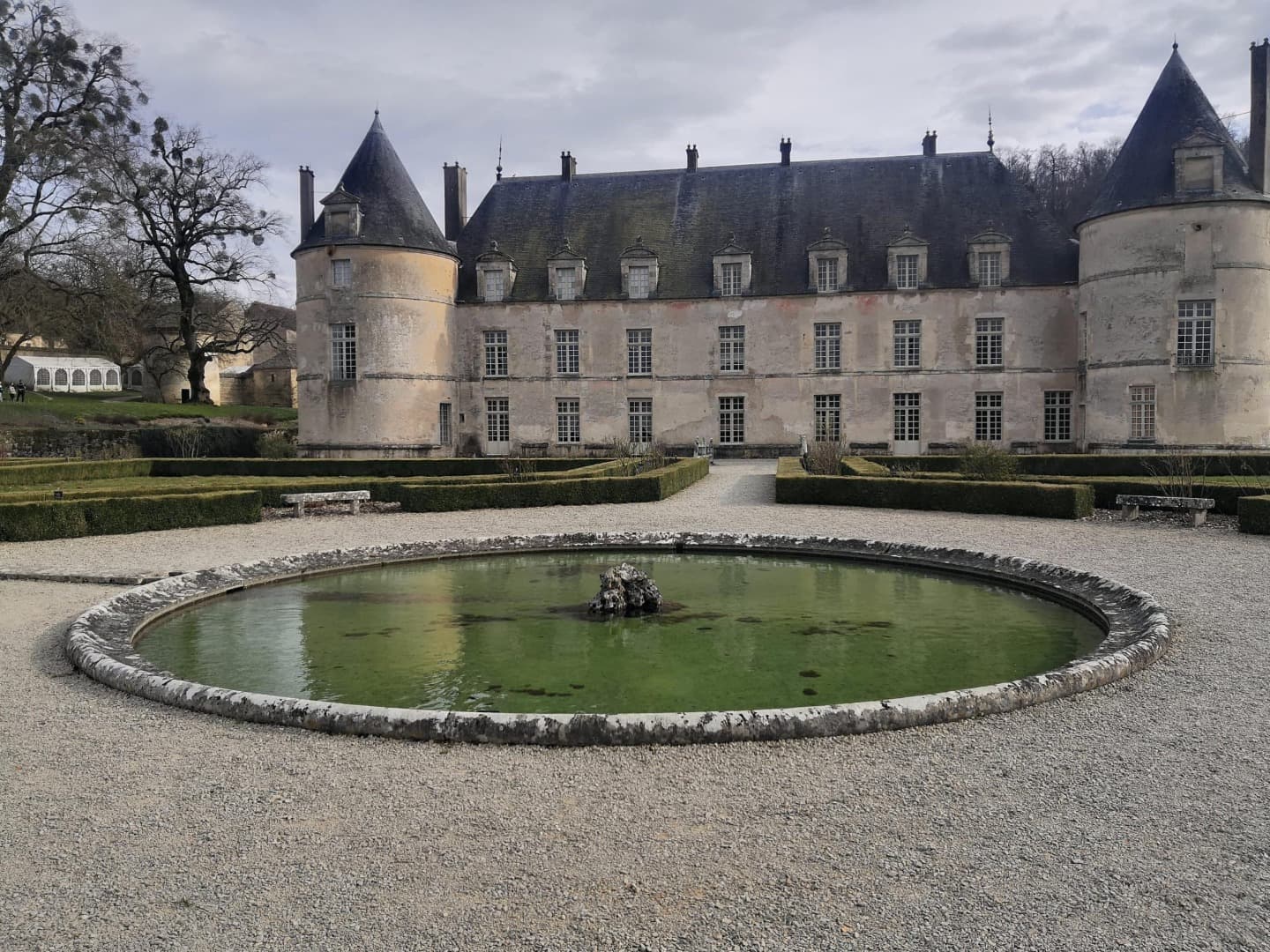
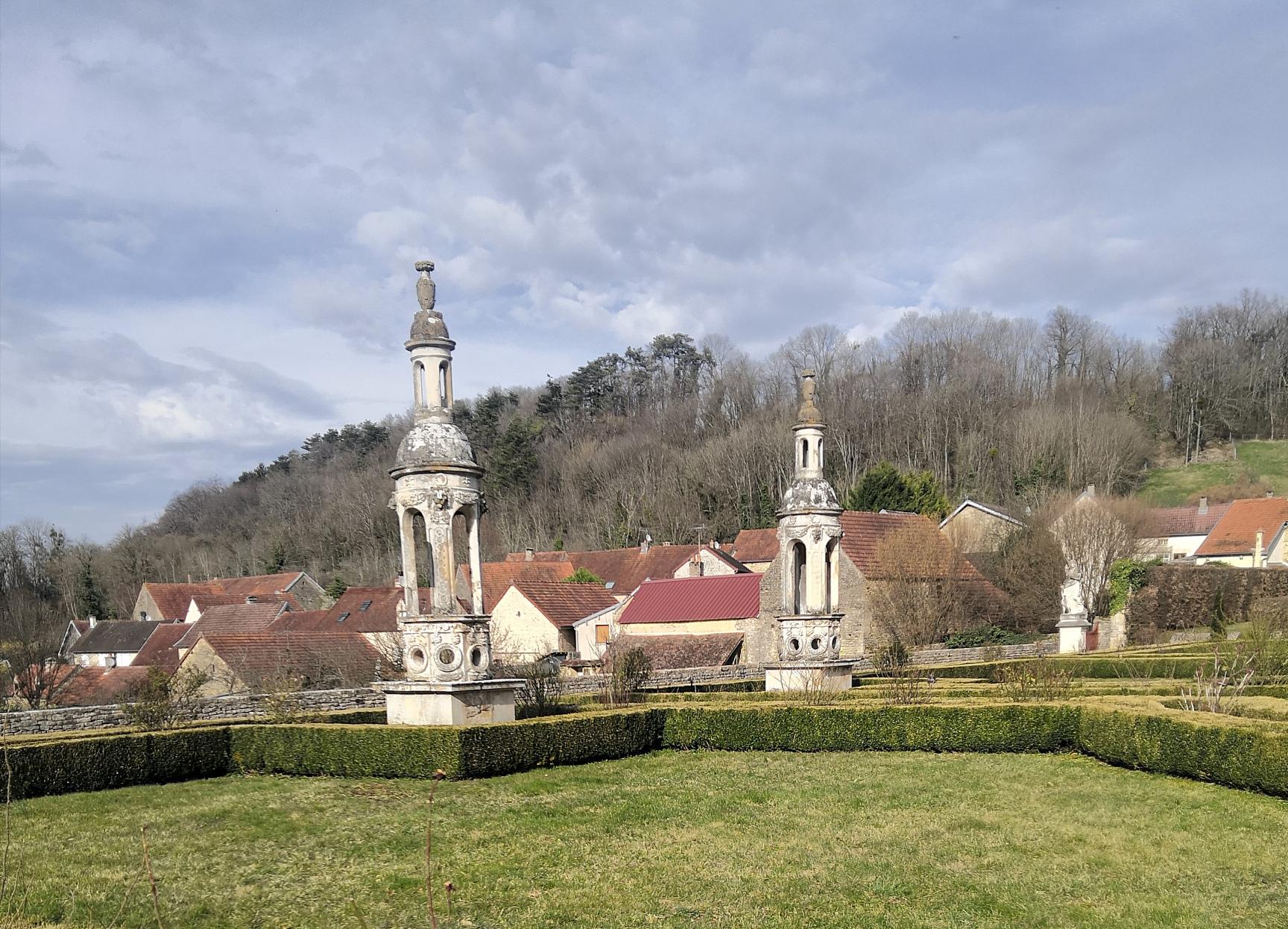
When you arrive at the château, the first thing you come across is the gardens. It’s a truly pleasant spot and the garden is particularly well laid out. There’s a wide tree-lined path, as well as a vegetable patch, and even a maze! (which gave me a bit of a scare after five minutes of trying to find my way out!)
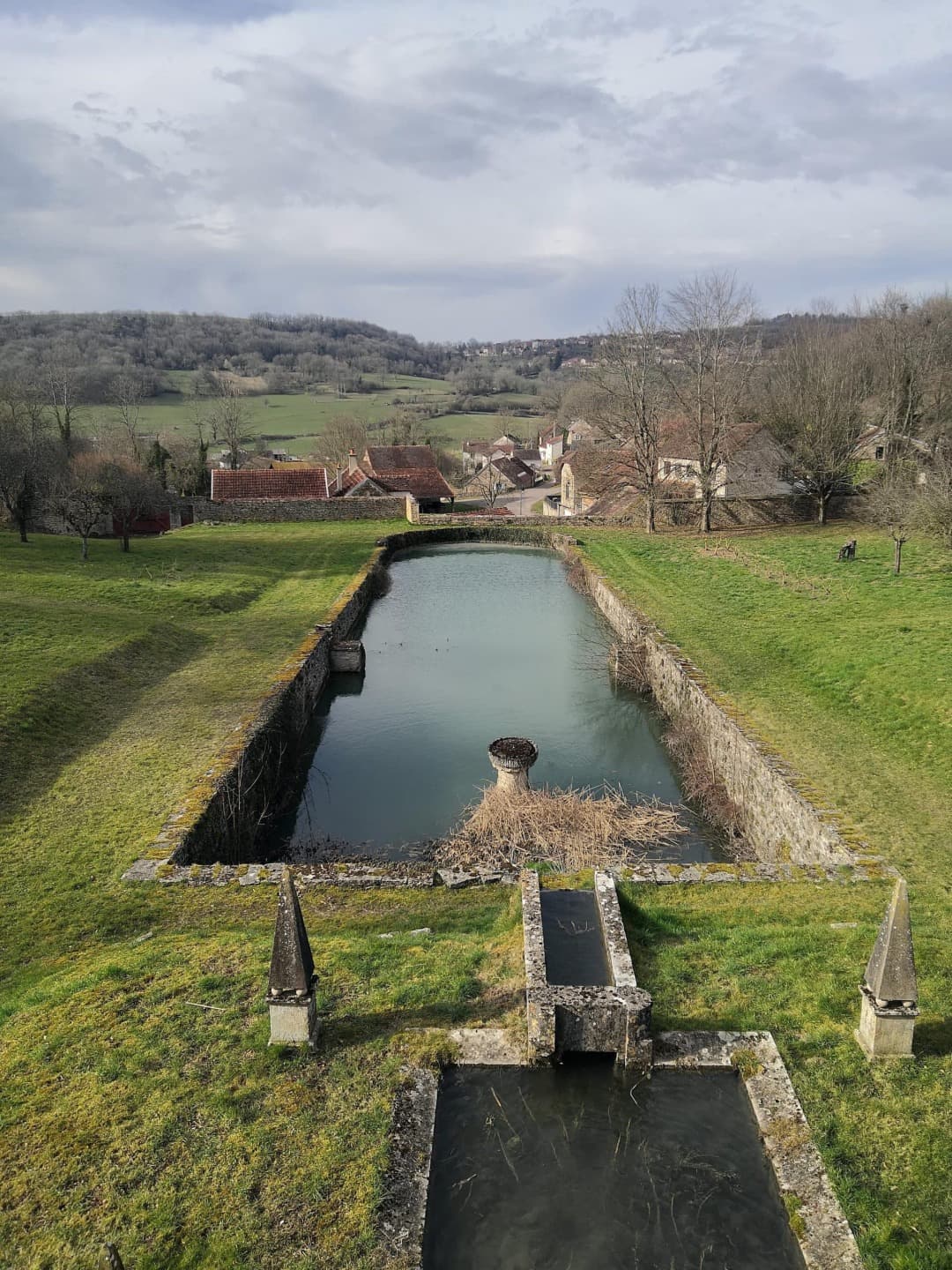
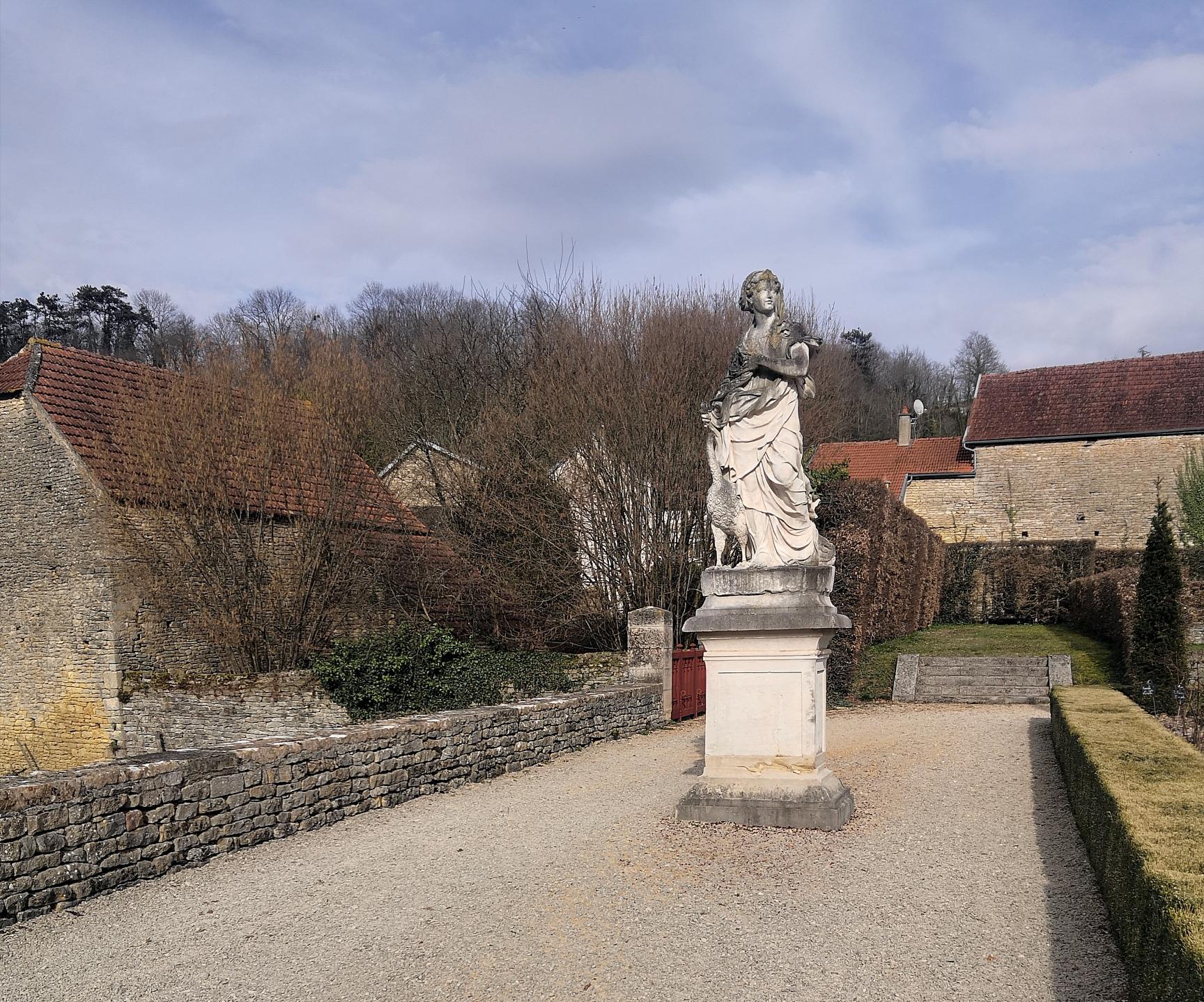
But for me, the most beautiful part of the garden is undoubtedly the pond adorned with statues here and there. A small stream runs through the grounds, flowing into a large pond, which gives it a wonderful charm. I spent long minutes there, strolling about and admiring the view from the château over the village of Bussy-le-Grand. You can easily take a stroll and enjoy in the middle of the garden for a while before visiting the château de Bussy-Rabutin’s indoors.
A tour of the castle
If the first rooms – the old kitchens – seem rather ordinary on the ground floor, with kitchenware and trinkets of all kinds scattered here and there, what follows holds some wonderful surprises in store!
Indeed, as you continue visiting the Château de Bussy-Rabutin, you will gain an ever clearer picture of the highly controversial figure that Roger de Bussy-Rabutin is. The whole of the château is imbued with his personal life; there are numerous portraits of important figures he met at the Court. I particularly liked the Hall of Mottoes. Here, you can see the count’s portrait surrounded by numerous mottos in French, as well as in other languages, all linked to his personal life.
The Hall of Warriors is also well worth a visit! It features numerous portraits of military figures from both France and abroad. The dark tone of the paintings gives this room a distinctive atmosphere.
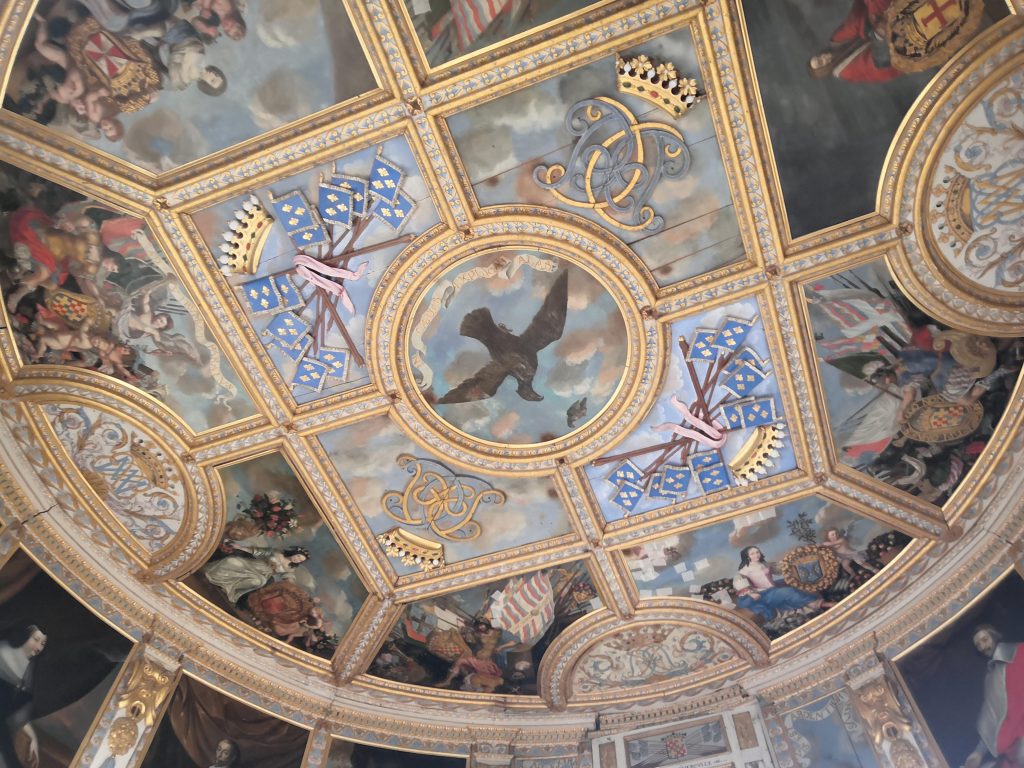
The Golden Tower Study is another surprising place to explore when visiting the Château de Bussy-Rabutin. Roger de Bussy-Rabutin hung portraits of his friends from the Court there. Beneath each one, a description of the subject can be read. For example, beneath the portrait of his former mistress—who left him after the scandal caused by his book—Rabutin wrote: “Whose fickleness has restored to honour the matron of Ephesus, the wives of Astolphe and Joconde.” Here again, you can easily picture this strong-willed character, who didn’t mince his words and certainly had a cheeky streak! The contrast between his status as a nobleman and his sharp, rebellious wit makes this visit truly memorable. The sheer number of portraits is staggering – there are even some on the ceiling!
Finally, you can even see a chapel down below. This room really took me aback, as I hadn’t expected to see this kind of room in a château.
Practical information
Visiting the Château de Bussy-Rabutin is simple : the site is open to visitors all year long. A ticket costs 9 euros and entry is free for disabled people. It is possible to visit the castle grounds separately. To enjoy this cultural outing, I recommend spending at least half a day there.
Did you enjoy this article? Feel free to leave a comment. If you want to discover more châteaux and castles, you can read this article.